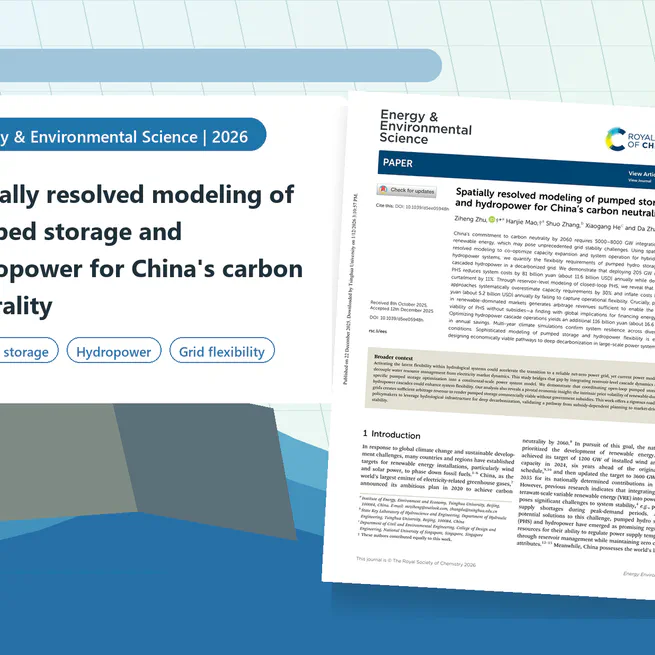
Spatially resolved modeling of pumped storage and hydropower for China's carbon neutrality
A spatially resolved CISPO model quantifies how pumped storage and hydropower flexibility can reduce costs, curtailment, and reliability risks in China's carbon-neutral power system.
Dec 22, 2025
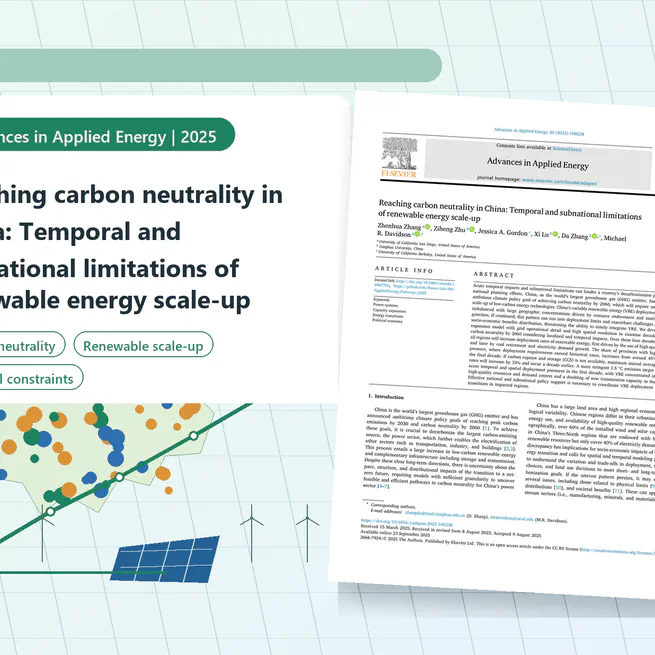
Reaching carbon neutrality in China: Temporal and subnational limitations of renewable energy scale-up
A high-resolution pathway study identifies temporal and regional bottlenecks in China's renewable energy scale-up toward carbon neutrality.
Dec 1, 2025
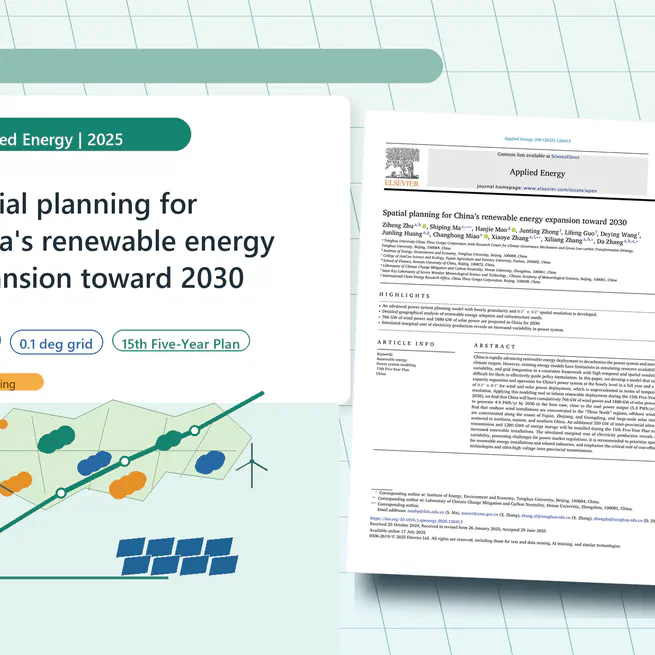
Spatial planning for China's renewable energy expansion toward 2030
A high spatial-temporal resolution RESPO model informs China's wind and solar deployment during the 15th Five-Year Plan period.
Nov 15, 2025
Ratcheting up wind and solar targets for decarbonizing the power sector in China and beyond
This paper examines decarbonization pathways for China's power sector through 2035 and proposes a more robust climate-action framework with minimum capacity and generation-share targets for wind and solar energy.
May 15, 2025
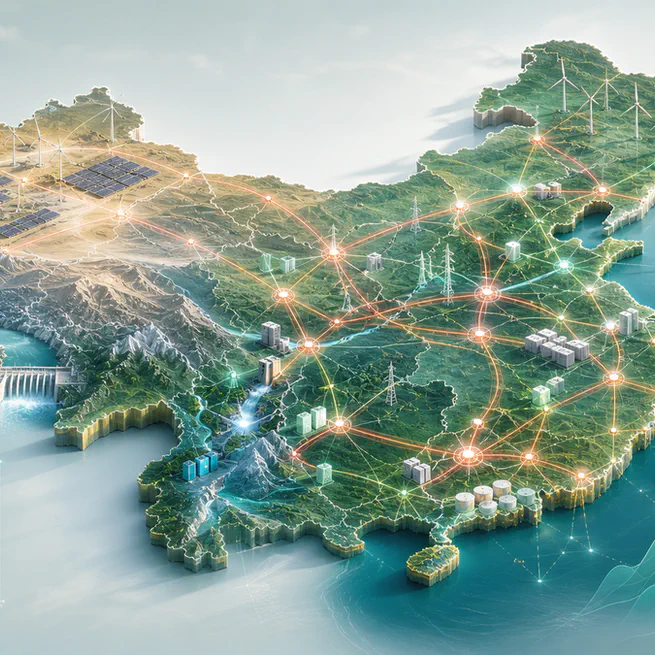
China Integrated Sustainable Power-system Optimization Model (CISPO)
China-focused planning model for carbon-neutral power transition, resolving provincial grids, hourly operations, flexibility, and CCS/DAC.
Mar 25, 2025
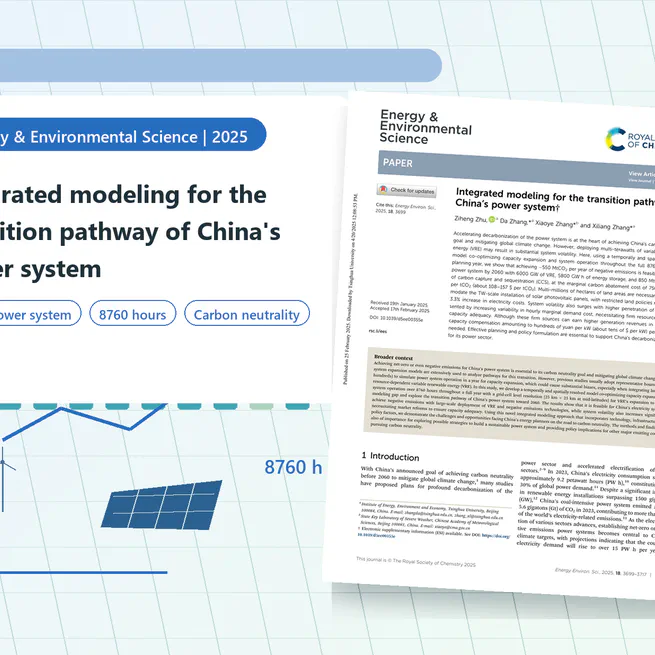
Integrated modeling for the transition pathway of China's power system
A temporally and spatially resolved model charts feasible transition pathways for China's power system to reach negative emissions by 2060 through renewable expansion and carbon capture.
Feb 17, 2025

Incorporating Data Centers into China’s National Carbon Emissions Trading System
According to the operation mechanism of China’s national carbon emissions trading system and starting from the operation mechanism of each component of the data center, this paper designs the management mechanisms including the allocation method of carbon emission quota, carbon emission accounting method and data quality supervision of the data center, and determines the responsibility subject and scale boundary of the data center incorporated into China’s national carbon emissions trading system in combination with the existing policies.
Jul 17, 2024
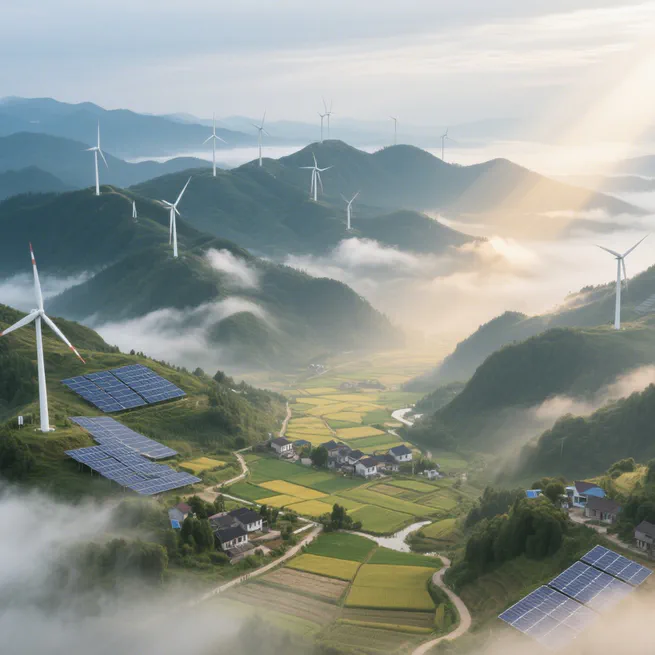
Spatially resolved land and grid model of carbon neutrality in China
To support China’s goal of achieving carbon neutrality by 2060, we find that 2 to 4 terawatts are needed each for wind and solar power, eight to ten times its 2022 installations. A highly spatially resolved model reflecting key trade-offs in land availability per current government policies and grid integration shows that 80% of solar and 55% of wind should be constructed within 100 km of major load centers. The model also suggests that terawatt-level energy storage should be deployed from scratch, and ultra-high voltage inter-provincial transmission should double/triple its current size to ensure sufficient power supply. When land use is subject to even tighter policy restrictions, at least 25% of solar power should be distributed generation.
Feb 26, 2024